 BYD Tech
The short answer
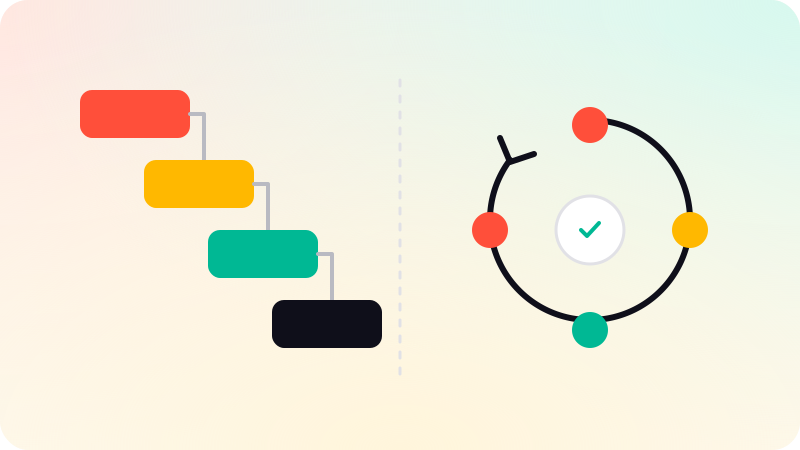
Waterfall plans the whole project up front and moves through fixed stages, design, build, test, release, in order. Agile builds in short cycles, shows working software after each one, and adjusts the plan based on what it learns. For a new product, where nobody knows exactly what users need, an agile approach with a written scope and a fixed first version usually works best.
Key points
- Waterfall: plan everything, then build it. Good when requirements are fixed.
- Agile: build in small steps, learn, adjust. Good when requirements will change.
- Most new products have uncertain requirements, which favors agile.
- Agile still needs a written scope and clear priorities.
- What matters most is seeing working software often.
Side by side
| Waterfall | Agile | |
|---|---|---|
| Planning | Everything up front | Enough to start, refined as you go |
| Order of work | Stages in sequence | Short cycles that each produce working software |
| Changing your mind | Expensive once a stage is done | Expected, and planned for |
| When you see the product | Near the end | Early and often |
| Suits | Fixed, well-understood requirements | Uncertain or changing requirements |
| Main risk | Building the wrong thing well | Drifting without a clear goal |
When waterfall works
Waterfall is sound when the requirements are known and will not move: a regulated system with a defined specification, an integration to a fixed standard, or a rebuild of something that already exists and must behave the same way. Planning everything first is efficient when there is little left to learn.
What agile actually means
The Agile Manifesto, written in 2001, values working software over comprehensive documentation, customer collaboration over contract negotiation, and responding to change over following a plan. It does not say to stop planning or writing things down. It says to prefer what produces learning.
- Work is broken into small pieces that each deliver something usable.
- The team shows working software regularly and gathers feedback.
- Priorities are reviewed often, and the most valuable work comes first.
- Scrum and Kanban are common ways of running it, not the definition of it.
What suits a new product
A first product is mostly unknowns: which feature matters, how users behave, what they will pay for. Fixing all of that in a plan up front means guessing. Building in small steps lets each step answer a question.
Agile without boundaries has its own risk: a project that keeps going with no clear end. The practical answer combines both ideas.
- Write a short scope for the first version, including what is out of scope. See How to write a PRD.
- Break it into small pieces, most important first.
- Show working software on a preview link you can open yourself.
- Review priorities with what you learn, and keep the out-of-scope list honest.
- Ship the first version, then plan the next with real usage in hand.
That is how we run MVP development: scope first, then design and build in steps you can click through, with progress on a board in plain English.
Sources
Checked when this guide was written.