 BYD Tech
The short answer
A request for proposal, or RFP, is a written document that asks several software vendors to answer the same questions about the same project, so their proposals can be compared fairly. A good one describes the business background, goals, users, must-have scope, integrations and constraints, states your expectations on code ownership, security and compliance, and says exactly what the response must include and how it will be scored. If you are an early-stage founder talking to a few studios about a first version, a one-page brief usually gets better answers than a formal RFP.
Key points
- Use an RFP when several vendors must answer the same questions and someone else, such as a board or procurement team, needs to see a fair process.
- Describe outcomes and must-haves, not a design. Let vendors propose the solution and explain why.
- State ownership, security and data protection expectations up front, so they shape the proposals instead of the contract talks.
- Share a budget range. Vendors can then propose what fits, instead of guessing.
- Publish the evaluation criteria and score every response against them, before you look at the totals.
- Answer vendor questions in writing and share every answer with every vendor.
When an RFP helps, and when a short brief is better
An RFP is a formal way to buy something that does not exist yet. It sets out the problem, the requirements and the rules of the selection, then asks each vendor to respond in the same format. Its value is comparability and a record of a fair process. Its cost is effort, on your side to write it and on the vendors’ side to answer it.
| A formal RFP fits when | A short brief fits when |
|---|---|
| A board, investor, public funder or procurement team needs to see a documented, fair selection | You are a founder choosing a team for a first version |
| The scope is reasonably well understood, such as replacing an existing system | The product is still an idea and discovery is part of the work |
| There are many integrations, data rules or compliance requirements to check | A few calls with each team would answer most questions |
| You will invite several vendors and must compare them on the same terms | You are talking to a small number of teams you already trust |
A long RFP for an early product often fixes untested assumptions in place, and the best small teams may decline to answer one. If that sounds like your situation, start with how to brief a development agency, which covers a one-page version. Many companies combine the two: a short brief to a wider list, then a fuller RFP to a shortlist.
The sections of a software RFP
| Section | What it answers |
|---|---|
| Background | Who you are, what the business does, and why this project exists now |
| Goals | What should change once it works, and how you will measure it |
| Users | Each kind of user, what they need to do, and roughly how many there are |
| Scope and must-haves | What the system must do, what would be good to have, and what is out of scope |
| Integrations and data | Systems it must connect to, data to migrate, and who controls each system |
| Constraints | Business events behind any deadline, platforms, languages, regions, existing contracts |
| Ownership and IP | Who owns the code and accounts, and when rights are assigned |
| Security and compliance | Data protection, accessibility, industry rules and security standards that apply |
| Budget | A range, or how the budget is set, in words if you prefer |
| Response requirements | What the proposal must contain, in what format, and by when |
| Evaluation criteria | How responses will be scored and who decides |
| Process and contacts | Key dates, how to ask questions, and the single point of contact |
Keep each section short and concrete. A vendor should be able to read the whole document in one sitting and know whether the project suits them.
Writing the scope: outcomes, must-haves and what is out
The scope is where most RFPs go wrong. They either describe a solution in so much detail that vendors can only quote it, or stay so vague that every vendor imagines a different product. Aim between the two:
- Describe what users must be able to do, not how the screens look. “A clinic manager can see every booking for the day and move one to another slot” is testable; “a modern dashboard” is not.
- Split requirements into must-haves, should-haves and nice-to-haves, and keep the must-have list honestly short.
- Write an out-of-scope list. It prevents more disagreement than any other section.
- List the integrations by name, with what data moves in which direction, and attach any API documentation you have.
- Give volumes where you know them, such as users, records, files or transactions, because they shape the architecture and the effort.
- Leave the technology choice to the vendor unless it is a real constraint, such as a system your team already runs. Their reasoning is part of what you are comparing.
Ownership, security and compliance expectations
These terms are easier to agree before a vendor has priced the work than after. Put them in the RFP and ask each vendor to confirm them or say what they would change.
- Ownership: intellectual property in everything delivered is assigned to your company in writing, the code lives in a repository your company owns, and cloud, domain and app store accounts are in your name. Who owns the code explains why each point matters.
- Open source and pre-existing tools: the vendor lists the open-source components and their licenses, and grants a permanent license to any of its own libraries it uses.
- Security: say what level of assurance you expect and how it will be checked. OWASP’s Application Security Verification Standard was written partly for this, as a basis for specifying application security requirements in contracts.
- Personal data: if the vendor will handle personal data on your behalf, the EU’s GDPR, in Article 28, requires a contract that sets out the processing and binds the processor to act only on your documented instructions, keep the data confidential and secure, and delete or return it at the end. Other countries have their own rules, so ask for a data processing agreement that fits where you and your users are.
- Accessibility: name the target, such as WCAG 2.2 at level AA, the current version of the W3C guidelines.
- Industry rules: health, finance, education or children’s data often bring their own requirements. Name the ones that apply and ask how the vendor has met them before.
This is general information, not legal advice. Rules differ by country and sector, so have a lawyer where you operate review the contract terms you attach.
What to ask for in the response
Tell vendors exactly what to send, in what order, and keep it to what you will actually read. Responses that follow the same structure are far easier to compare.
- Their understanding of the problem, in their own words, and the questions they would still need answered.
- The proposed approach: phases, what comes first and why, and how users will be involved.
- Assumptions behind the estimate, written down and specific.
- Risks they see, and how they would reduce the biggest ones early.
- The team: roles, the people who would do the work, and who reviews it.
- How change is handled once work starts, and the engagement model they propose.
- Their pricing model and estimate, broken down the same way for every vendor, such as by phase or by part of the system.
- Confirmation of your ownership, security and data terms, or the changes they would ask for.
- Relevant past work and references you can contact.
On budget: sharing a range, or at least how the budget is set, helps vendors propose the version of the product that fits it instead of guessing. Hiding it tends to produce proposals for very different products, which defeats the point of an RFP.
How to compare proposals fairly
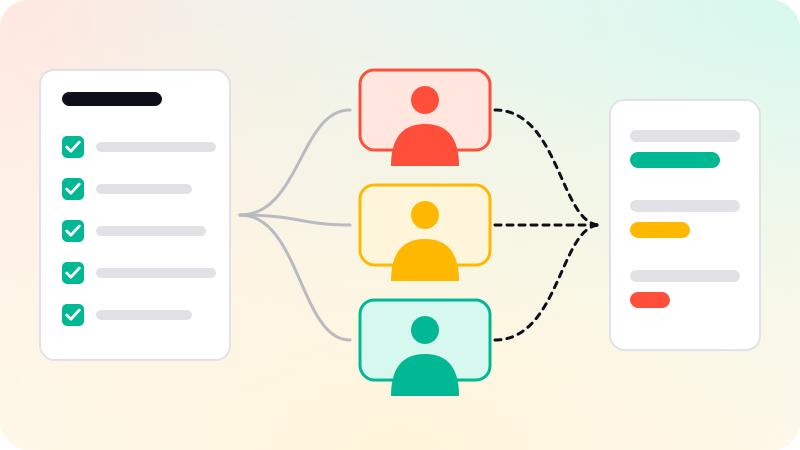
Decide the criteria and their weight before the responses arrive, publish them in the RFP, and score each response separately before discussing them as a group. A simple scorecard:
| Criterion | What a strong response shows | Weight |
|---|---|---|
| Understanding of the problem | Restates your goals accurately and asks about the real gaps | High |
| Approach and risk handling | A sensible order of work, with the riskiest parts tested first | High |
| Team and relevant experience | Named people with similar work you can check | High |
| Fit with must-haves | Every must-have addressed, with anything left out stated | Medium |
| Ownership, security and data terms | Accepted as written, or changes explained | Medium |
| Value for the budget | A clear breakdown that matches the scope proposed | Medium |
| Communication | Clear writing, direct answers, questions asked early | Low to medium |
- Send the same RFP to every vendor at the same time.
- Collect questions by a set date, answer them in writing, and share every answer with every vendor without naming who asked.
- Check each response against the must-haves and mark anything missing or added.
- Have each evaluator score on their own first, then compare scores and discuss the differences.
- Line up the assumptions from every proposal and ask each vendor about the ones the others made.
- Invite a shortlist to a working session with the people who would do the work, not only the people who sold it.
- Check references, then decide, and tell the unsuccessful vendors briefly why.
A lower total often means a smaller product, a riskier plan or different assumptions, not a cheaper version of the same thing. Comparing on the same headings first makes that visible.
Red flags in a response
- No questions at all. A vendor that understood the project will have some.
- A firm estimate for a scope that is still uncertain, with no assumptions written down.
- A team described only by company size, with nobody named who would do the work.
- Pushback on assigning intellectual property, or a plan to keep the code in the vendor’s own accounts.
- Copied text that does not mention your users, goals or must-haves.
- Security and data protection answered with a single line of reassurance and nothing you can check.
- Pressure to decide before your stated process ends.
Once you have chosen, the contract should carry what the RFP promised; the software development contract checklist covers what to put in it.
A short RFP template
Copy these headings and answer each in plain sentences. If something is not decided yet, say so rather than deleting the heading.
- Background: your company, what it does, and why this project exists now.
- Goals: what should change, and how you will measure it.
- Users: each kind of user, what they need to do, and rough numbers.
- Scope: must-haves, should-haves, nice-to-haves, and what is out of scope.
- Integrations and data: systems to connect, data to migrate, and who controls each.
- Constraints: the business events behind any deadline, platforms, regions and existing contracts.
- Ownership and IP: assignment of rights, accounts in your name, open-source list.
- Security and compliance: data protection, accessibility target, security standard and industry rules.
- Budget: a range, or how the budget is set.
- Response requirements: the sections you want, in order, the format, and the deadline.
- Evaluation criteria: what you will score, how it is weighted, and who decides.
- Process: key dates, how to ask questions, and one named contact.
If you are preparing an RFP for a web product, web app development describes how we approach the build: the code lives in your GitHub from day one, and the founders are on the calls.
Sources
Checked when this guide was written.