 BYD Tech
The short answer
Product-market fit means you have found a group of customers who want your product badly enough that they keep using it, pay for it, and tell others, without you having to push. Marc Andreessen, who popularized the term, described it as being in a good market with a product that can satisfy it. You can usually tell from behavior: usage that keeps coming back, customers who would be upset to lose it, and growth that does not depend on constant selling.
Key points
- Fit is about a specific group of customers, not everyone.
- Retention is the clearest signal: people keep coming back on their own.
- Ask users how they would feel if they could no longer use the product.
- Sign-ups, press and investor interest are not fit.
- Before fit, change the product and the market. After fit, scale.
Where the term comes from
Marc Andreessen wrote in 2007 that product-market fit means being in a good market with a product that can satisfy that market, and that it is the only thing that matters for a young company. He also described how it feels from the inside: customers buy the product as fast as you can make it, and you are struggling to keep up.
Signs you have it, and signs you do not
| You probably have fit when | You probably do not when |
|---|---|
| Users come back without reminders | Usage drops off after the first week |
| Customers refer others unprompted | Every new customer needs a hard sell |
| People complain when something breaks | Nobody notices when something breaks |
| Sales cycles are getting shorter | Deals stall at "interesting, let us think about it" |
| You cannot keep up with demand | Growth stops when you stop pushing |
How to measure it
- Retention by group: of the users who started in a given month, how many are still active later? A curve that flattens instead of falling to zero is the strongest signal.
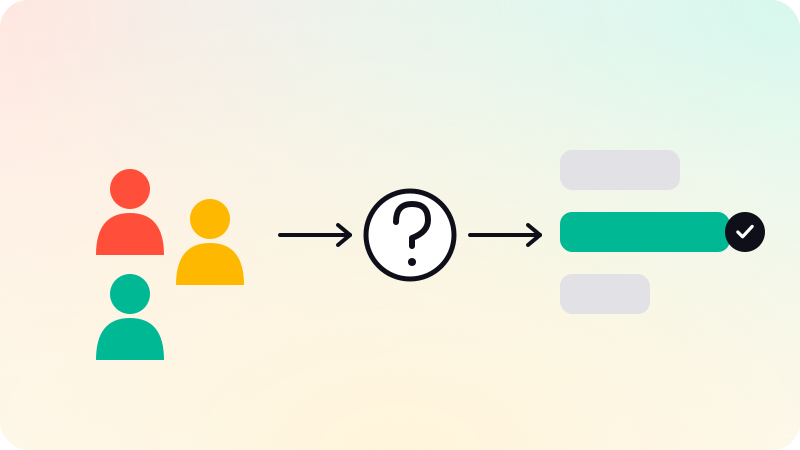
- The disappointment question: ask active users how they would feel if they could no longer use the product. A large share answering "very disappointed" suggests fit with that group.
- Organic growth: what share of new users came from referrals and word of mouth.
- Paying behavior: renewals, upgrades, and customers who pay without a long negotiation.
Look at these by customer type. Fit often exists strongly with one group and not at all with another, and the average hides it.
Things that look like fit and are not
- A spike of sign-ups after a launch or a press mention.
- Enthusiastic feedback in interviews that does not turn into use.
- Investor interest.
- Revenue from one large customer who needs heavy custom work.
- Growth that depends entirely on paid ads.
How to get there
- Validate the problem before building. See How to validate a startup idea.
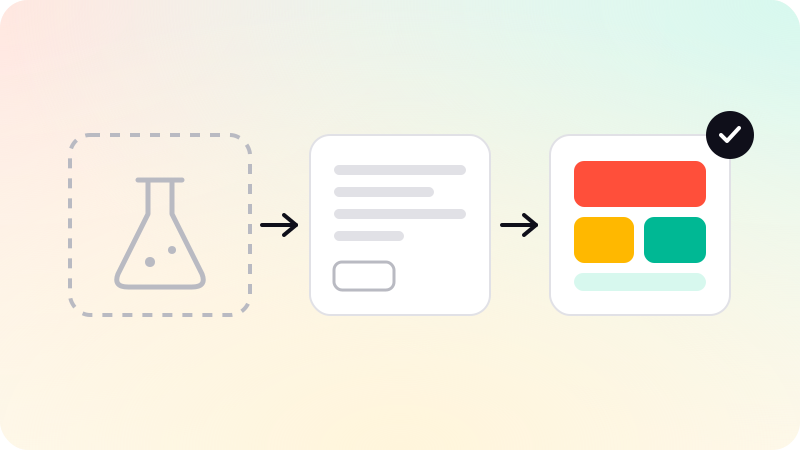
- Ship a small first version to a narrow group. See How to build an MVP.
- Measure retention from the start, by group.
- Talk to the users who stay, and to the ones who leave.
- Narrow the market before widening the product. Fit with a small group beats a weak fit with everyone.
Until there is fit, the product should be cheap to change. That is the reason we build first versions small, in code you own, in MVP development.
Sources
Checked when this guide was written.