 BYD Tech
The short answer
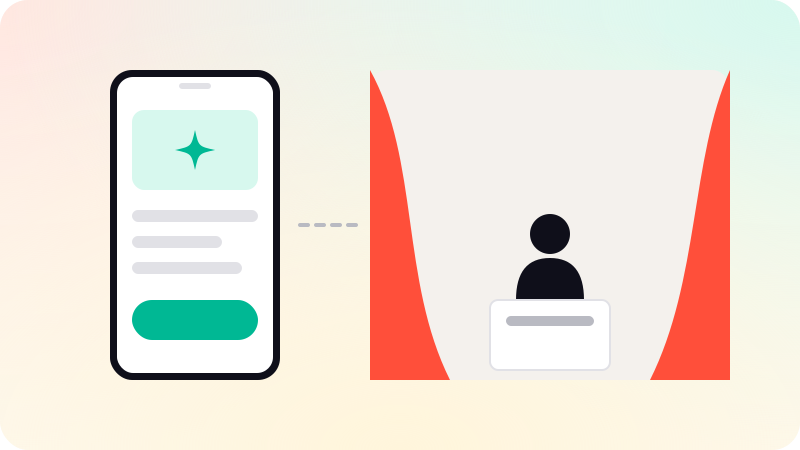
Concierge and Wizard of Oz MVPs test demand by doing the work by hand before building software to do it. In a concierge MVP, the customer knows a person is delivering the service, and the team learns what customers really need. In a Wizard of Oz MVP, the customer sees what looks like a working product while people do the work behind it, which tests whether a specific solution is wanted. Both are cheap, fast and honest about demand, but they do not scale.
Key points
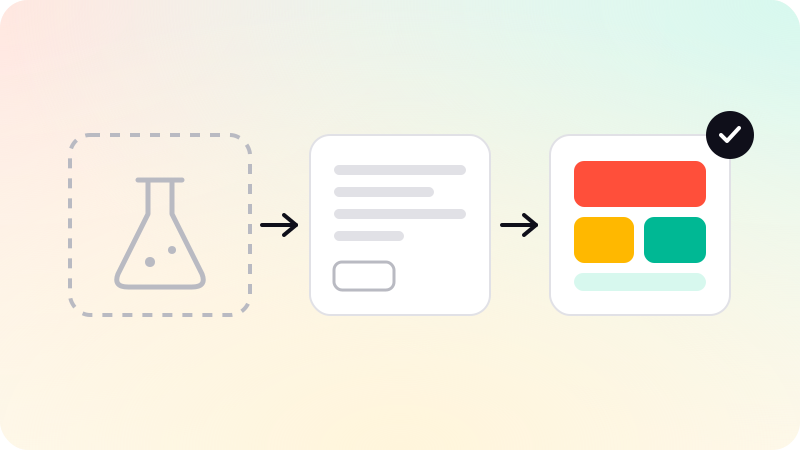
- Do the job by hand first, automate what proves valuable.
- Concierge: the customer knows a person is helping.
- Wizard of Oz: an interface on the front, people behind it.
- Both test demand with little engineering.
- Be honest about how personal data is handled.
The difference
| Concierge MVP | Wizard of Oz MVP | |
|---|---|---|
| What the customer sees | A person delivering the service | An app or website that seems automated |
| What happens behind it | The same person, openly | People doing the work by hand |
| Best for testing | What customers need, and how | Whether a specific solution is wanted |
| Software needed | Almost none | A front end only |
Mind the Product offers a simple rule: if you have a screen to test but no back end, it is a Wizard of Oz test; if you have the back-end process but no screen, it is a concierge test.
Examples
- A meal-planning service where the founder writes each customer’s plan by hand and sends it on WhatsApp: concierge.
- A "smart" document-review app where uploads go to a reviewer who types the results into the app: Wizard of Oz.
- An AI agent idea tested by a person following the agent’s intended steps, before any model is wired up.
Running one
- Write down what you want to learn, for example "will clinic owners use a shared booking link?"
- Deliver the outcome by hand for a small number of real customers.
- Record every step you do manually; this becomes the specification for automation.
- Measure whether customers come back and whether they will commit, ideally with money.
- Automate the steps that are repeated and proven, and stop if demand is not there.
Doing it responsibly
If people will handle customer data behind the scenes, say so in your privacy policy, and do not imply that sensitive information is processed only by machines when it is not. Keep the test small and time-limited: a manual service that grows quietly becomes a promise you cannot keep.
These tests fit early validation. See How to validate a startup idea and MVP vs prototype vs proof of concept. When the manual version proves its demand, building the real product is MVP development.
Sources
Checked when this guide was written.