
 BYD Tech
The short answer
An AI voice agent is software that holds a phone conversation in natural speech: it listens, understands what the caller wants, answers or takes an action such as booking a slot, and hands over to a person when needed. It works best on frequent, predictable calls like bookings, order status and after-hours questions, and needs the same care as any agent: clear limits, testing on real calls, and an easy route to a human.
Key points
- Voice agents combine speech recognition, a language model and a voice.
- Best for frequent, predictable calls, especially out of hours.
- Every call needs a quick way to reach a person.
- Tell callers they are speaking to an AI, and follow the recording rules where you operate.
- Measure resolved calls and transfers, not only how natural it sounds.
How a voice agent works
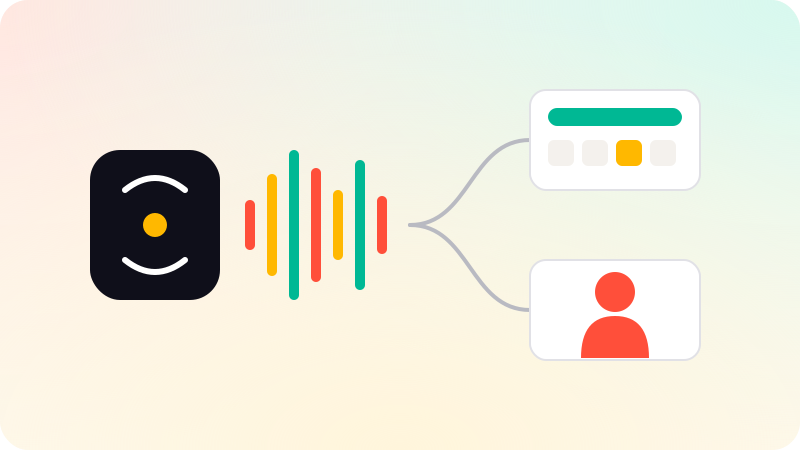
- Speech to text: the caller’s words are transcribed as they speak.
- Understanding: a language model works out what the caller wants.
- Action: it looks something up or does something, such as checking an order or booking a time.
- Text to speech: the reply is spoken back in a natural voice.
- Handoff: if it cannot help, it transfers the call with a summary.
Underneath, it is the same kind of system described in What is an AI agent?, with speech on both ends. The hard part on the phone is timing: people expect a reply almost instantly, and they interrupt.
Where voice agents work well
| Use | Why it fits |
|---|---|
| Appointment booking and changes | Clear goal, limited options, checkable result |
| Order and delivery status | One lookup, one answer |
| After-hours calls | Captures the caller’s need instead of a voicemail |
| Call triage | Finds out what the caller needs and routes them |
| Reminders and confirmations | Short, structured, repeated many times |
Where it struggles
- Upset callers, complaints and anything sensitive. These belong with a person.
- Noisy lines, strong accents and names, where transcription errors creep in.
- Long, open-ended conversations with no clear goal.
- Anything where a mistake is costly and hard to undo.
Getting it right
- Start with one call type that is frequent and simple.
- Collect real recordings or transcripts of that call type to test against.
- Make "speak to a person" work at any moment, in plain words.
- Tell callers they are speaking to an AI, and check the consent and recording rules for every region you call or serve.
- Put limits in code: what it may book, change or cancel.
- Review a sample of calls every week, and track resolved calls and transfers.
A text agent is usually the easier first step, because it is simpler to test and review. See AI agents for small business. We start agent projects with one job and real past conversations in AI agent development.
Sources
Checked when this guide was written.


