 BYD Tech
The short answer
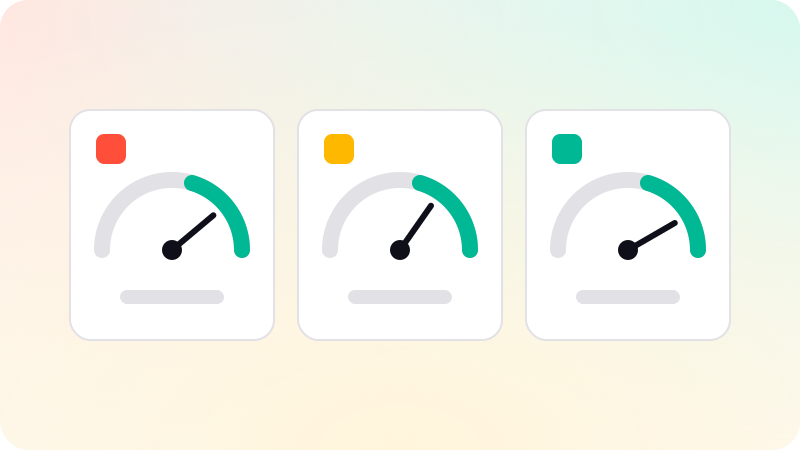
Core Web Vitals are three measurements Google uses to judge how a page feels to real visitors. Largest Contentful Paint measures loading and should be 2.5 seconds or less. Interaction to Next Paint measures responsiveness and should be 200 milliseconds or less. Cumulative Layout Shift measures visual stability and should be 0.1 or less. A page passes when 75 percent of visits meet all three.
Key points
- LCP: how fast the main content appears. Target 2.5 seconds or less.
- INP: how fast the page reacts to a tap or click. Target 200 milliseconds or less.
- CLS: how much the layout jumps. Target 0.1 or less.
- They are measured on real visits, at the 75th percentile.
- They help rankings at the margin. Useful content still matters more.
The three measures
| Metric | What it measures | Good | Typical cause of a poor score |
|---|---|---|---|
| LCP, Largest Contentful Paint | When the largest visible element finishes loading | 2.5 seconds or less | Slow server, large images, render-blocking files |
| INP, Interaction to Next Paint | The delay between an interaction and the screen updating | 200 milliseconds or less | Too much JavaScript running at once |
| CLS, Cumulative Layout Shift | How much content moves unexpectedly | 0.1 or less | Images, ads or fonts loading without reserved space |
INP became a Core Web Vital in 2024, replacing First Input Delay. Older articles that mention FID are out of date.
How they are measured
There are two kinds of data, and they answer different questions. Field data comes from real Chrome users visiting your pages and is what Google uses. Lab data comes from a test run on one machine and is what you use to find and fix problems.
- PageSpeed Insights shows both, for any public address.
- Search Console’s Core Web Vitals report groups your pages by status, using field data.
- Lighthouse and Chrome DevTools give lab results while you work.
- A new site has no field data until enough people have visited it.
The pass mark is the 75th percentile. Three quarters of visits must be good, so a site that is fast on your laptop can still fail for visitors on slower phones.
Improving LCP
- Serve pages as ready-made HTML from servers close to the visitor.
- Compress and correctly size the main image, and load it with priority.
- Remove or defer scripts and styles that block the first paint.
- Host fonts yourself and preload the ones used at the top of the page.
Improving INP
- Ship less JavaScript. Every library is work the phone has to do.
- Break long tasks into smaller ones so the page can respond between them.
- Audit third-party scripts: chat widgets, trackers and tag managers are common culprits.
- Give immediate visual feedback on a tap, then do the heavy work.
Improving CLS
- Set width and height on every image and video so space is reserved.
- Reserve room for anything that loads late: banners, embeds, cookie notices.
- Avoid inserting content above what the visitor is already reading.
- Use font settings that avoid a visible swap, or preload the font.
How much do they matter for SEO?
Google says Core Web Vitals are used by its ranking systems, and also that good scores do not guarantee good rankings. Relevance and useful content come first. Where two pages are similarly helpful, the better experience can be the difference.
The stronger reason to care is your visitors. A page that loads fast and does not jump keeps more of the people who arrive. How the choice of platform affects this is in Next.js vs WordPress, and fast pages with the technical SEO done are part of our website development.
Sources
Checked when this guide was written.