 BYD Tech
The short answer
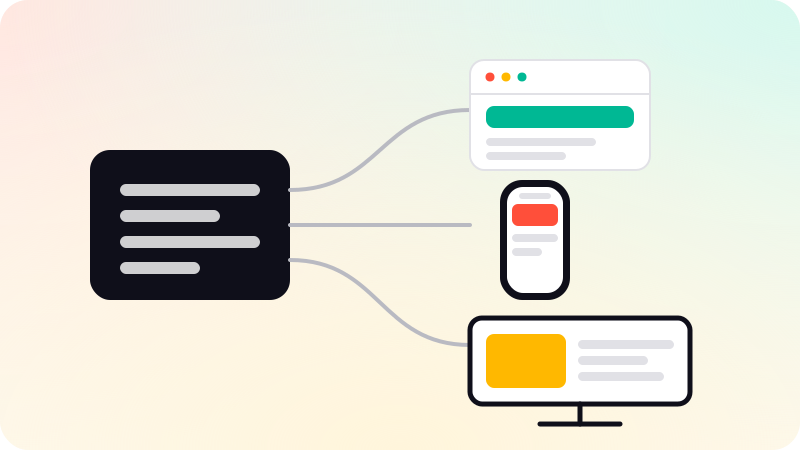
A headless CMS is a content management system with no built-in website. Editors write and organize content in it, and that content is delivered through an API to whatever needs it: a website, a mobile app, a screen in a shop. The "head" is the part visitors see, and it is built separately. Choose one when you want a fast custom site, or the same content in more than one place.
Key points
- Traditional CMS: content and website in one system. Headless: content only, delivered by API.
- The website is built separately, so it can be as fast and custom as you like.
- One source of content can feed a site, an app and anything else.
- Editors still get a friendly editor. Layout changes need a developer.
- For a simple content site that marketing runs alone, a traditional CMS is often enough.
What "headless" means
A traditional CMS, such as WordPress used the classic way, does two jobs. It stores your content, and it builds the pages visitors see. The two are tied together by a theme.
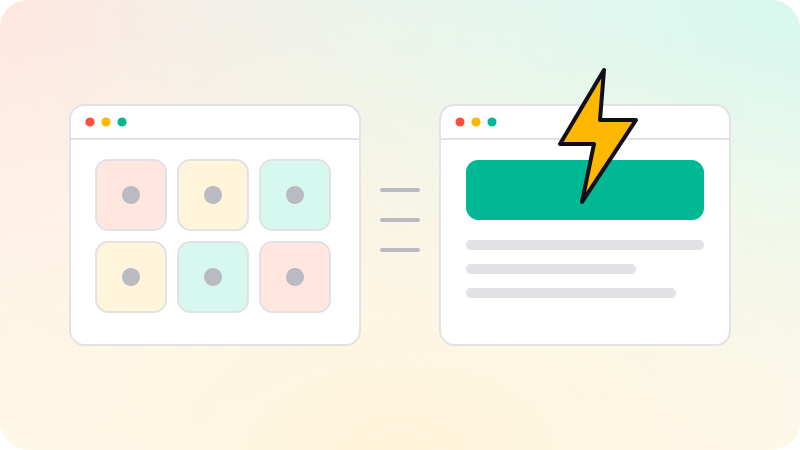
A headless CMS does only the first job. It gives editors a place to write, and it gives developers an API to fetch that content. The front end, the head, is a separate piece of software. That separation is the whole idea.
Traditional vs headless
| Traditional CMS | Headless CMS | |
|---|---|---|
| What it includes | Content and the website | Content only |
| How pages are made | Themes and plugins | A separately built front end |
| Where content can go | Mainly that one website | Any site, app or device |
| Design freedom | Within the theme | Whatever you build |
| Who can launch it | Almost anyone | Needs a developer |
| Upkeep | Core, theme and plugin updates | The CMS is usually hosted for you |
How it works in practice
- A developer defines content types: a blog post, a case study, a service page, a team member.
- Editors fill those in through the CMS editor, with previews.
- The website asks the CMS for content through its API.
- Pages are built from that content, often ahead of time, and served fast.
- When an editor publishes, the site rebuilds the pages that changed.
Because content is structured as fields, not as one block of formatted text, the same post can appear as a web page, a card in an app and a line in a newsletter without being rewritten.
When a headless CMS makes sense
- You want a custom, very fast website and still want non-developers to edit it.
- The same content must appear on a site and in an app.
- Your site is built with a framework such as Next.js.
- You want fewer things exposed to attack. A static front end with a hosted CMS leaves little to patch.
When you do not need one
- The site is a blog or brochure that marketing wants to run entirely alone.
- You change layouts and page designs often, and have no developer on hand.
- You rely on plugins that only exist for a traditional CMS.
The wider comparison is in Next.js vs WordPress. When we build a site in website development, a headless CMS is what lets your team edit pages without a developer.
Sources
Checked when this guide was written.