 BYD Tech
The short answer
Design thinking is a problem-solving approach that starts with the people you are designing for. It is usually described in stages: empathize (learn about users), define (state the real problem), ideate (generate options), prototype (make something quick to try) and test (put it in front of users). The stages loop rather than run once. For a small team it comes down to talking to users, writing the problem down, and testing cheap versions before building the real thing.
Key points
- Start from users’ real behavior, not your assumptions.
- Write the problem down before solving it.
- Generate several options before choosing one.
- Prototype cheaply and test with real users.
- Loop back whenever a test shows you were wrong.
The stages
| Stage | Question | What it produces |
|---|---|---|
| Empathize | Who are the users and what do they actually do? | Interview notes, observations |
| Define | What exactly is the problem? | A problem statement |
| Ideate | What could solve it? | Many options, then a short list |
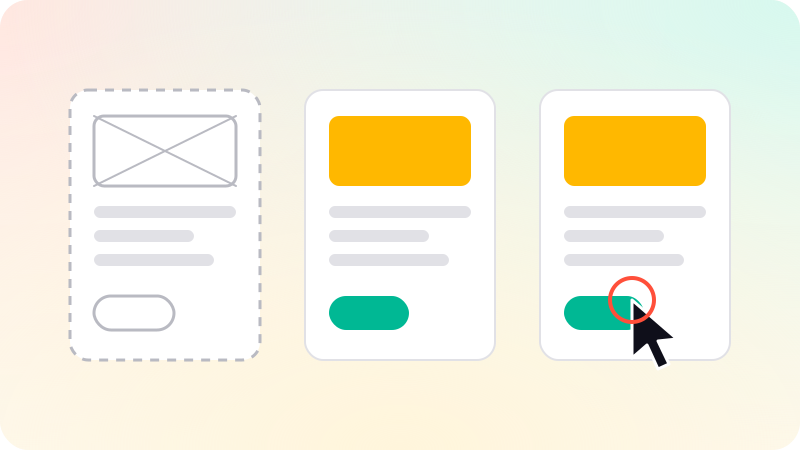
| Prototype | What would the best options look like? | Sketches, wireframes, clickable mockups |
| Test | Does it work for real users? | What worked, what did not, what to change |
The Nielsen Norman Group describes the same ideas in three phases: understand, explore and materialize. The labels matter less than the habit of learning before building.
Using it on a real product
- Talk to five to eight people who have the problem. See How to conduct user interviews.
- Write one sentence: who has the problem, what they are trying to do, and what gets in the way.
- Sketch several different solutions, quickly and roughly.
- Turn the most promising one into a clickable prototype.
- Watch a handful of users try it, without helping them.
- Change it, and test again until people get through without getting stuck.
Where it goes wrong
- Running workshops with sticky notes but never meeting a user.
- Treating the stages as a one-way checklist.
- Falling for the first idea and skipping options.
- Building a polished prototype, which makes people reluctant to change it.
- Testing with colleagues instead of the people the product is for.
Design thinking and the MVP
Design thinking and the lean MVP fit together. Design thinking finds the right problem and a usable solution with prototypes. The MVP then tests it with real use. See MVP vs prototype and Wireframe vs mockup vs prototype. Prototypes tested with real users are part of our UI/UX design work.
Sources
Checked when this guide was written.