 BYD Tech
The short answer
A two-sided marketplace is only useful once buyers can reliably find sellers, so the first version should make matches happen in one small niche, not build a platform for everyone. Recruit one side by hand, usually the supply, match people manually or behind a simple interface, and add software only for the steps that repeat: listings, search, messaging, bookings or orders, payouts through a payments provider’s marketplace product, and reviews. Judge it by liquidity, the share of requests that end in a match, and by whether both sides come back.
Key points
- The chicken-and-egg problem is solved by hand, in one niche, before it is solved by software.
- Start with the side that is harder to get, which is usually supply, and bring it to a place where demand already exists.
- Match people manually first. Automate the steps that repeat once you know what a good match looks like.
- Use a payments provider’s marketplace product for split payouts instead of moving money yourself.
- Trust and safety is part of the first version: identity checks, honest reviews and a way to report problems.
- Measure liquidity, match rate and repeat use, not sign-ups on either side.
The chicken-and-egg problem
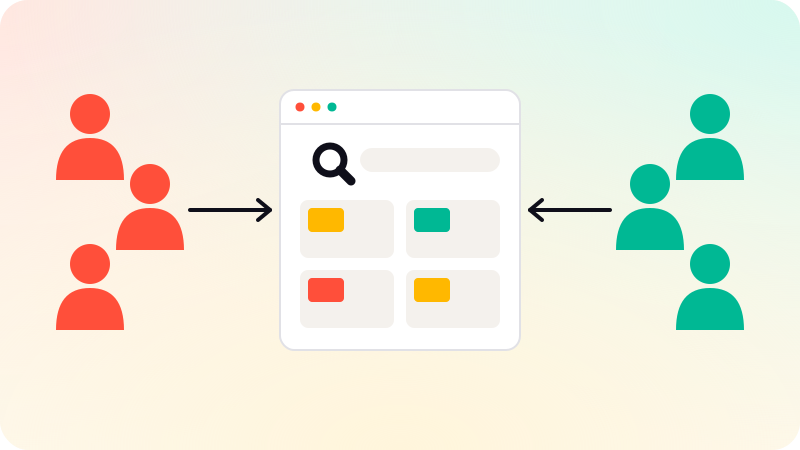
Buyers come to a marketplace for what is on it, and sellers come for the buyers. With neither, there is no reason for either to join. That is the chicken-and-egg problem, and it is why a marketplace MVP is a different exercise from a normal product MVP: a beautiful app with no supply is an empty shop.
Paul Graham’s essay “Do Things that Don’t Scale” calls marketplaces especially hard to get rolling, and describes the Airbnb founders going door to door in New York to recruit hosts and help them improve their listings. The lesson holds for any marketplace: the first matches are made by founders doing unglamorous work, and the software follows.
One useful question at the start: which side is harder to get? Usually it is supply, the hosts, tutors, contractors or sellers, because they need to believe enough demand will come to justify the effort of listing. Demand is often easier to find because it already exists somewhere else, in a Facebook group, a forum, a trade show or a spreadsheet someone keeps.
Pick one side and one niche first
A marketplace feels liquid when a buyer searching for something finds a good option quickly. That depends on density, not size: forty dog walkers in one neighborhood beat four hundred spread across a country. Graham compares this to keeping a fire contained until it gets hot, and points to Facebook launching only for Harvard students so that enough of them joined to reach critical mass.
| Too broad to start | Narrow enough to start |
|---|---|
| Freelancers for any business | Bookkeepers for independent dental practices |
| Home services in a country | Emergency plumbers in one city |
| Used goods of every kind | Used road bikes for riders in one region |
| Tutors for every subject | Exam tutors for one national high-school exam |
Pick the niche where you can reach both sides yourself, where matches happen often enough to learn from, and where the current way of finding each other is clearly painful. Recruit enough supply to serve the first buyers well, then open the doors to demand. Expanding to the next city or category is easier once one works, because you will know what a good listing and a good match look like.
The smallest version: match by hand first
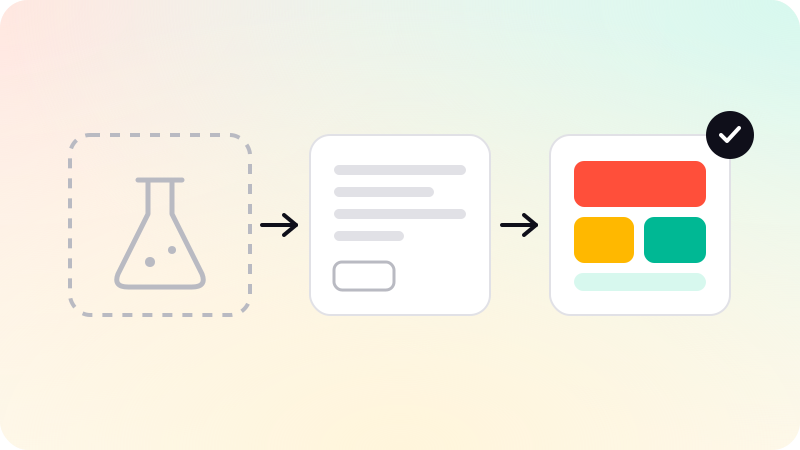
Before building matching software, make matches yourself. In a concierge version, buyers tell you what they need and you introduce them to a seller by email or phone. In a Wizard of Oz version, buyers use what looks like a working site while your team does the matching behind it. Concierge and Wizard of Oz MVPs explains both and when each fits.
- Recruit a first group of suppliers personally, and write their listings with them.
- Publish the listings on a simple page, even a basic site with a request form.
- When a request comes in, pick the match yourself and introduce the two sides.
- Follow up after the job or the sale: did it happen, was it good, would they do it again?
- Write down every step you repeated. Those are the first features worth building.
- Automate one step at a time, starting with the one that takes the most time or causes the most errors.
Manual matching also teaches you what the matching software should do. You learn which details buyers ask about, which sellers get chosen and why, and where deals fall through. That knowledge is the real product of a marketplace, and it is hard to get any other way.
The core features
Once matches are happening, these are the parts most marketplaces need, with the smallest version of each that still works:
| Feature | What it does | Smallest useful version |
|---|---|---|
| Accounts and profiles | Lets each side sign up and say who they are | Email sign-in, a profile with the few fields buyers actually use to choose |
| Listings | Shows what is offered, by whom, where and when | A structured form, so every listing has the same details |
| Search and filters | Helps buyers find a fit | A handful of filters that match how buyers asked you for help during manual matching |
| Messaging | Lets the two sides ask questions before committing | In-app messages with email notifications |
| Bookings or orders | Turns interest into a commitment | A request and accept flow, with clear status for both sides |
| Payments and payouts | Takes money from buyers and pays sellers, minus your fee | A payments provider’s marketplace product, described below |
| Reviews | Builds trust and shows quality | Reviews only after a completed transaction, from both sides |
| Admin tools | Lets your team approve listings, handle disputes and see what is happening | A simple internal screen; it saves more time than any public feature |
Leave out what does not help the first matches: loyalty schemes, complex ranking, multiple languages, native apps for both sides. A responsive web app is often enough for the first version, and a mobile app can follow once you know which side uses it daily.
Payments and split payouts
Taking money from a buyer, keeping a fee and paying the rest to a seller sounds simple, but it involves verifying who the sellers are, holding funds, handling refunds and disputes, and tax reporting. Collecting money into your own account and paying sellers by hand can raise legal and tax questions that depend on the country, so most marketplaces use a payments provider’s marketplace or platform product instead.
- Seller onboarding: each seller gets a connected account with the provider, which collects and verifies the identity and bank details the rules require.
- Split payments: the buyer pays once, the provider takes the platform’s fee, and the rest goes to the seller, either at once or after the job is done.
- Payouts: the provider sends money to sellers’ bank accounts on a schedule you set within its rules.
- Responsibility: depending on the setup, the marketplace may be the merchant of record and may be responsible for refunds, disputes and sellers’ negative balances. Stripe’s marketplace guide, for example, says the platform covers the negative balances of its connected accounts in that configuration.
Check that the provider supports payouts to sellers in the countries where they are, not only taking payments from buyers where they are. Before you switch on live payments, work through going live with payments.
Trust and safety from the first version
People are trusting strangers, so trust is the product as much as the listings are. The basics:
- Verify sellers before they go live, at least their identity and contact details, and approve the first listings by hand.
- Collect reviews only from people who completed a transaction, and publish negative ones as well as positive ones.
- Give both sides a clear way to report a listing, a user or a problem, and someone who reads the reports.
- Write simple rules: what may be listed, how cancellations and refunds work, and what happens when someone breaks the rules.
- Keep communication and payment on the platform where you can, so you can help when something goes wrong.
Some of this is also law, and it differs by country. In the EU, the Digital Services Act requires online platforms that let consumers buy from traders to collect traders’ names, contact details, identification and payment account details before they can sell, although Article 29 excludes micro and small enterprises from that section unless they are designated as very large platforms. In the US, the INFORM Consumers Act requires online marketplaces to collect and verify information from high-volume third-party sellers of new consumer products and give buyers a way to report suspicious activity. Fake reviews are covered too: the FTC’s rule on consumer reviews bans fake reviews and incentives tied to a particular sentiment, and in the UK the Digital Markets, Competition and Consumers Act lists fake reviews as a banned practice and expects publishers of reviews to take reasonable steps to prevent and remove them. This is general information, not legal advice; ask a lawyer where you operate.
The metrics that matter
Counting sign-ups on each side tells you little. A marketplace works when the two sides find each other and come back. Andreessen Horowitz’s list of marketplace metrics covers liquidity, concentration, repeat use and take rate, and these are the ones to watch in an MVP:
| Metric | What it measures | Why it matters |
|---|---|---|
| Liquidity or match rate | The share of requests or listings that end in a transaction | The clearest sign the marketplace is useful |
| Time to match | How long a buyer waits for a good option, or a listing waits for a buyer | Shows which side is short |
| Repeat use | How many buyers and sellers transact again, by cohort | Shows whether people value it or tried it once |
| Concentration | How much of the activity comes from a few sellers or buyers | High concentration means losing one hurts |
| Take rate | The share of transaction value the marketplace keeps | Shows how much value you capture, once there is volume |
If match rate is low because buyers find nothing, recruit supply. If listings sit unseen, bring demand. If people match once and never return, the problem is the experience or the value of a match, not the marketing. MVP metrics covers retention cohorts and setting up the measurements.
Build, buy or assemble
You do not always need custom software for the first version. There are off-the-shelf marketplace platforms and no-code tools that give you listings, search, messaging and payouts out of the box. The choice depends on how standard your matching is:
| Option | Fits when | Watch for |
|---|---|---|
| Manual with simple tools | You are still learning what a good match is | It stops scaling quickly; that is the signal to build |
| Off-the-shelf marketplace software | Your marketplace works like many others, such as rentals or services by the hour | Limits on custom flows, pricing rules and data export |
| Custom build | Matching, pricing, scheduling or trust is what makes you different | Scope: build only the parts that are yours, and buy the rest |
Even a custom marketplace buys most of its parts, payments above all, plus email, maps and identity checks. Build vs buy software walks through the decision. If you are planning a marketplace, MVP development describes how we approach the build: the code lives in your GitHub from day one, and the founders are on the calls.
Sources
Checked when this guide was written.
- Paul Graham: Do Things that Don’t Scale
- Andreessen Horowitz: 13 Metrics for Marketplace Companies
- Stripe Docs: Build a marketplace (Connect)
- Stripe Docs: Connect, embedded finance for platforms and marketplaces
- EUR-Lex: Regulation (EU) 2022/2065, the Digital Services Act (Articles 29 and 30)
- European Commission: The impact of the Digital Services Act on digital platforms
- Federal Trade Commission: Informing Businesses about the INFORM Consumers Act
- Federal Trade Commission: The Consumer Reviews and Testimonials Rule, Questions and Answers
- GOV.UK: Unfair commercial practices (CMA207)